

Sterling Silver vs. White Gold: A Complete Comparison
Two of the most popular metals in fine jewelry. Almost identical at first glance. Wildly different in price, care, and the reason you'd choose one over the other.
Walk into any jewelry store and you'll see two displays of beautiful, gleaming, silver-toned jewelry that look — to the untrained eye — almost exactly the same. One is sterling silver. The other is white gold. The price tags, however, tell a very different story.
So which one should you actually buy? The answer depends on what you want from a piece of jewelry, how often you'll wear it, what you're willing to spend, and what kind of relationship you want to have with the metal over time. Here's the complete, honest breakdown.
What Is Sterling Silver?
Sterling silver is a precious metal alloy made of 92.5% pure silver mixed with 7.5% other metals — usually copper, occasionally zinc or nickel. The "925" stamp you'll see on a piece of fine sterling silver jewelry refers to that 92.5% silver content. Pure silver is too soft to use for most jewelry — it bends, scratches, and loses its shape — so the small percentage of harder metal gives it the durability needed for daily wear.
Sterling silver has a bright, slightly cool, mirror-like finish. It's been used for fine jewelry for thousands of years and has been the go-to metal for everything from royal coronation jewels to Tiffany's iconic 1837 collection.
What Is White Gold?
White gold is also an alloy — but it starts with yellow gold, not silver. Pure 24-karat gold is naturally yellow, and to make it appear white (silver-toned), it's mixed with white metals like palladium, nickel, or silver. Most white gold jewelry is 14k (58.3% gold) or 18k (75% gold), with the remaining percentage being the white alloy metals.
To get that bright, mirror-like white finish, white gold is also typically plated with rhodium — a rare, highly reflective metal from the platinum family. The rhodium gives white gold its signature shine, but it does wear off over time and needs to be reapplied every few years.
The Side-by-Side Comparison
| Sterling Silver | White Gold | |
|---|---|---|
| Composition | 92.5% silver + 7.5% alloy | Yellow gold + white alloy + rhodium plating |
| Appearance | Bright, slightly cooler tone | Bright, slightly warmer once rhodium wears |
| Hardness (Mohs) | 2.5–3 | 3–4 (14k) or 2.5–3 (18k) |
| Tarnish? | Yes, requires occasional polishing | No, but rhodium plating wears off |
| Hypoallergenic | Usually (some contain nickel) | Sometimes (often contains nickel) |
| Typical price range | $50–$500 per piece | $500–$5,000+ per piece |
| Resale value | Modest | Higher |
| Daily wear durability | Excellent with care | Excellent |
How They Look — Honestly
This is the part most articles skip. Side by side, on a tray under jewelry-store lighting, the two metals look very similar. White gold appears slightly warmer and slightly more yellow underneath, depending on how recently it was rhodium-plated. Sterling silver appears slightly cooler, slightly brighter, with a more mirror-like surface.
In real-world wear — at a dinner, in candlelight, against your skin — you would be hard-pressed to tell them apart from across a room. This is one of the great open secrets of fine jewelry: a beautifully made sterling silver piece reads visually as fine jewelry just as easily as white gold does.
The Care Difference
Both metals are durable, but they require different care.
Sterling silver tarnishes. It's a normal, harmless reaction between the copper in the alloy and sulfur compounds in the air. You'll see it first as a slight dulling, then as a darker patina along the edges and crevices. The good news: it polishes off easily with a sterling silver polishing cloth or a quick dip in soapy water with a soft brush. Properly stored sterling silver — in an airtight pouch or a lined jewelry box — tarnishes very slowly.
White gold doesn't tarnish, but the rhodium plating wears off. As the rhodium fades over time (usually 2–4 years for daily-worn pieces), the underlying yellow gold begins to show through, giving the piece a warmer, slightly grayish tone. The fix is to take the piece to a jeweler for re-plating, which costs $50–$150 per piece.
So the maintenance trade-off is: silver needs occasional polishing (free, takes 5 minutes); white gold needs occasional re-plating (paid, requires a jeweler visit).
The Price Difference — and Why
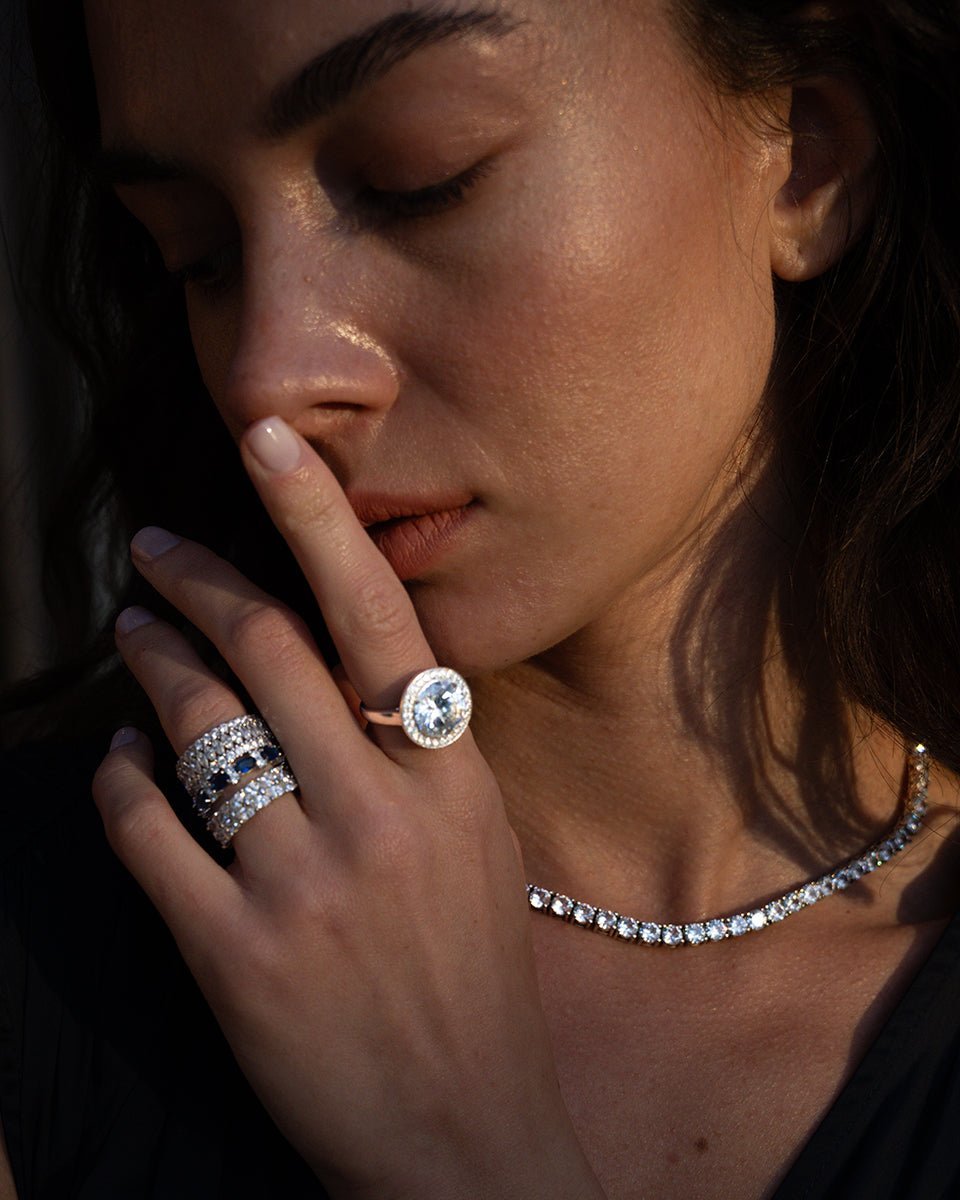
This is the biggest practical difference. A beautifully crafted sterling silver rivière necklace might cost $200–$400. The equivalent piece in white gold, set with the same stones, would cost $1,500–$5,000. The difference is almost entirely in the metal itself.
This price gap is why sterling silver has become the metal of choice for women who want fine jewelry they can actually wear often — versus the kind of jewelry that lives in a safe and only comes out for weddings.
When to Choose Sterling Silver
- You want fine jewelry you can wear daily without anxiety
- You prefer to own multiple beautiful pieces rather than one expensive one
- You don't want to be precious about it — wearing it to lunch, to work, to dinner
- You like the cooler, brighter, slightly more mirror-like finish
- You appreciate the 4,000-year history of silver as a precious metal in its own right
When to Choose White Gold
- You want a piece for a once-in-a-lifetime occasion (an engagement ring, an anniversary piece)
- You're investing in a heirloom you plan to pass down
- You want the higher resale value that comes with gold's commodity status
- You don't mind the periodic re-plating
The Honest Truth
There is no "better" metal — there is only the metal that's better for your life. A woman who wears her jewelry every day, layers it freely, and occasionally throws it in a travel pouch is happier with sterling silver. A woman buying a single piece to wear on her wedding day and pass to her daughter is happier with white gold.
For most women, most of the time, sterling silver is the smarter choice — not because it's cheaper, but because it lets you actually wear and enjoy the jewelry instead of saving it for a "someday" that never comes.
The Godfrey Allure Approach
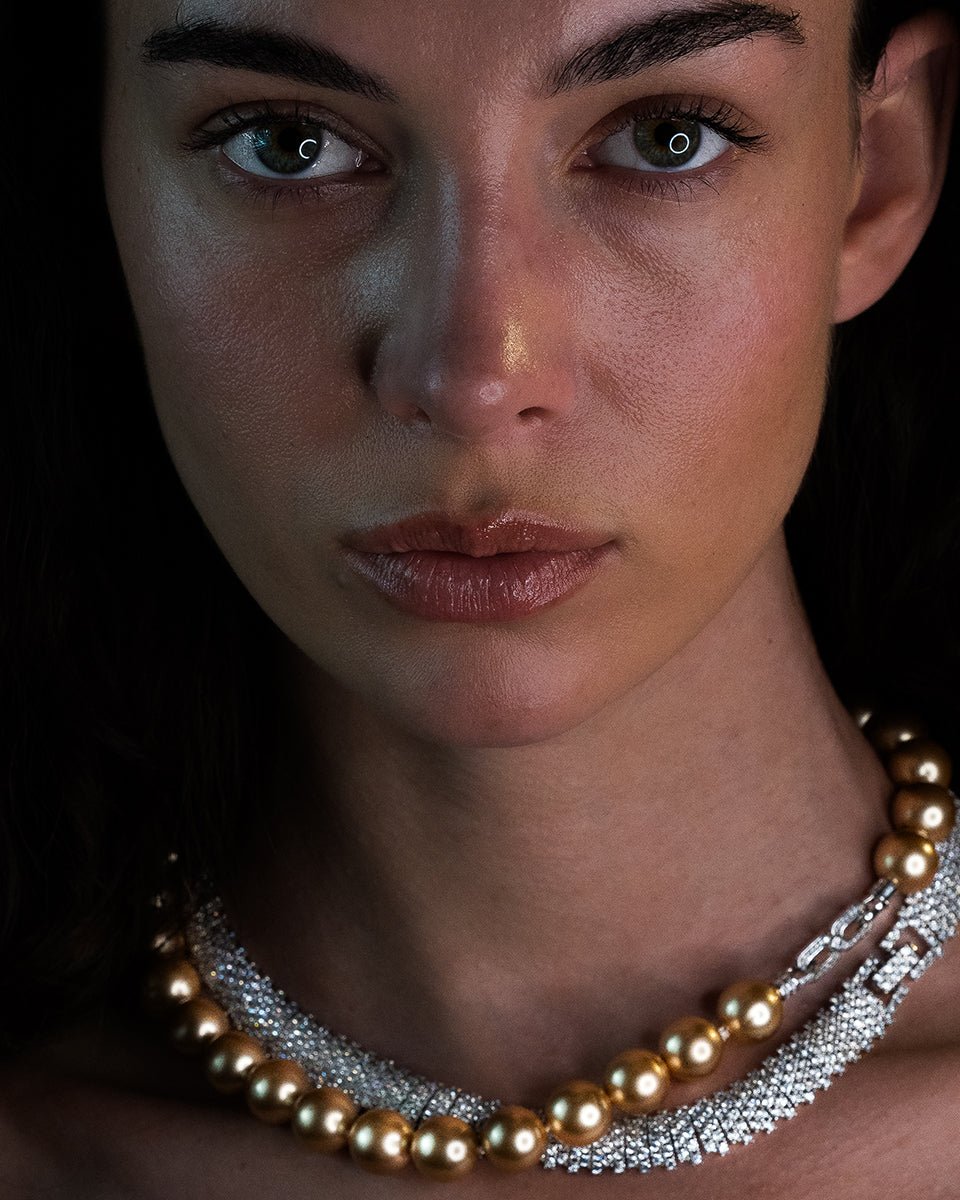
Every piece of Godfrey Allure jewelry is crafted in solid 925 sterling silver and set with hand-selected Allyure Stones™. We chose silver because we believe in jewelry that gets worn, not jewelry that gets saved. Our pieces are designed to live alongside the woman who owns them — from morning coffee to candlelit dinners, layered with whatever she's wearing, photographed often, and remembered always.
Because the most beautiful piece of jewelry is the one you actually wear.

Leave a comment
This site is protected by hCaptcha and the hCaptcha Privacy Policy and Terms of Service apply.