
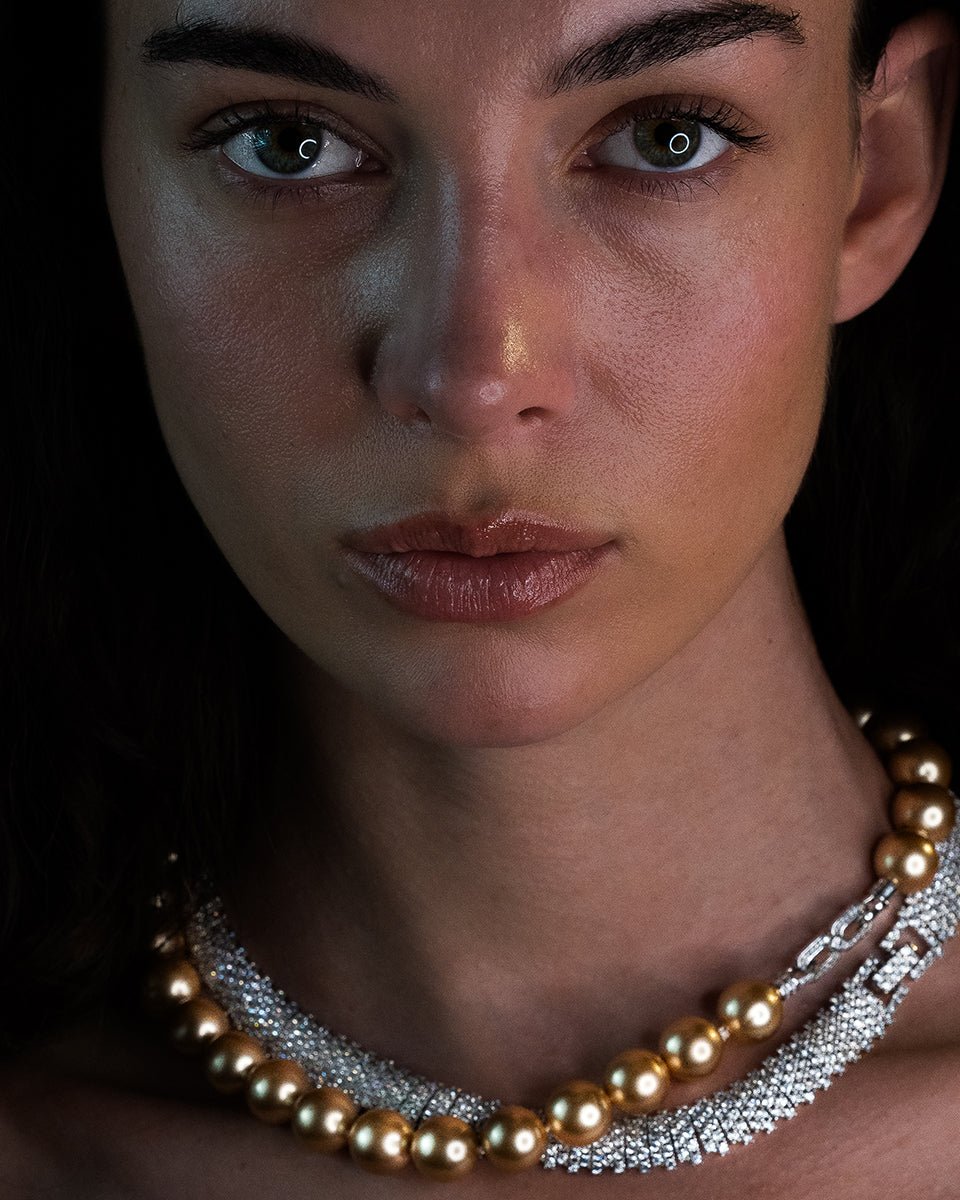
What Are Shell Pearls? A Modern Pearl Buyer's Guide
They're not technically grown in oysters. They're not manufactured the way cubic zirconia is. Shell pearls are something genuinely different — and once you understand what they are, you might prefer them.
Pearls are one of the oldest and most romantic categories of jewelry in the world. They've been worn by queens and movie stars and grandmothers alike. But the word "pearl" actually covers a surprisingly wide range of materials — from the multi-thousand-dollar South Sea pearls grown in oysters in the warm waters of Australia, to the hand-strung freshwater pearls in your grandmother's strand, to the perfectly round, luminous pearls you'll find in jewelry from Chanel, Dior, and the Spanish house Mallorca.
That last category — the perfectly matched, beautifully glowing pearls used by some of the most prestigious fashion houses in the world — is what we call shell pearls. And they deserve a proper introduction.
What Is a Shell Pearl?
A shell pearl is a pearl crafted from real mother-of-pearl — the same iridescent inner lining of an oyster shell that produces natural pearls. The mother-of-pearl is finely milled, formed by hand into a perfectly round bead, and finished with a luminous nacre coating that gives it the depth, warmth, and luster of a fine cultured pearl.
Shell pearls are sometimes called mother-of-pearl pearls, South Sea shell pearls (when the shell comes from South Sea oysters), or Mallorca pearls (after the Spanish island where the most famous shell pearls are produced). All of these terms refer to essentially the same thing: a pearl made from real shell material rather than grown in a living oyster.
How They're Made
The process is more involved than most people realize, and understanding it changes how you think about the result.
- The shell is sourced. The most prized shell pearls are made from oyster shell from the South Sea (Australia, Indonesia, the Philippines), where the mother-of-pearl has the deepest, warmest luster.
- The shell is finely ground. The mother-of-pearl is milled to a fine powder.
- The bead is formed. The powdered mother-of-pearl is bound with natural and synthetic compounds and shaped — by hand — into a perfectly spherical bead. Hand-shaping is critical: it produces the symmetry that mass-manufactured beads can't achieve.
- The nacre coating is applied. A pearlescent nacre is layered onto the bead, sometimes through dozens of coats. The number and quality of coats determines the final luster.
- The pearl is polished and graded. Finished pearls are inspected for shape, luster, and color uniformity. Those that don't meet quality standards are rejected.
The result is a pearl that has the warmth and depth of a fine cultured strand, with consistency and durability that genuine pearls can rarely match.
Shell Pearls vs. Cultured Pearls vs. Imitation Pearls
The pearl world has a lot of categories, and they're often confused. Here's the clearest way to think about it:
| Type | What it is | Price range |
|---|---|---|
| Natural pearl | Formed inside a wild oyster without human help. Extremely rare. | $1,000s–$1,000,000s |
| Cultured pearl | Formed inside an oyster with a human-inserted irritant. Most "real pearls" sold today. | $50–$10,000+ |
| Shell pearl | Made from real mother-of-pearl, not grown in an oyster. | $20–$500 |
| Imitation/glass pearl | Made from glass or plastic, coated with a pearlescent paint. | $5–$50 |
The key thing to notice: shell pearls are made from real shell, while imitation pearls are made from glass or plastic. They are not the same category, and the difference shows in the depth, warmth, and weight of the pearl. Shell pearls feel like fine jewelry in a way that imitation pearls never do.
Why Some Brands Choose Shell Pearls
It's not just about price. Many of the most prestigious fashion houses use shell pearls as a deliberate design choice. Here's why:
1. Perfect Uniformity
Cultured pearls are formed by living oysters, which means every pearl is slightly different — different shape, different luster, different size. For a strand of pearls where uniformity is the entire visual point (think the matched-strand classics worn by Jackie Kennedy and Audrey Hepburn), cultured pearls require massive sorting and selection to find enough matching pearls for a single necklace. The cost reflects that work.
Shell pearls, because they're shaped by hand from milled mother-of-pearl, can be made identical. Every pearl in a shell pearl strand can match every other pearl in size, color, and luster. This is the look that defined Old Hollywood pearl jewelry — and it's actually easier to achieve with shell pearls than with cultured ones.
2. Greater Durability
Cultured pearls are delicate. The nacre layer can wear thin over time, especially with daily wear, exposure to perfume, or contact with skin oils. Shell pearls, with their multi-coat nacre finish and solid mother-of-pearl core, hold up significantly better to everyday wear.
3. Accessible Price
A matched strand of cultured South Sea pearls can run $5,000 to $50,000 or more. The same visual statement in shell pearls — equally beautiful, equally luminous — can be had for under $300. For women who want pearls they can actually wear without anxiety, shell pearls solve a real problem.
4. Consistent Color
Cultured pearls vary in color — some are warmer, some cooler, some have green or pink overtones. Shell pearls are made to a specific color spec, which means a strand looks unified and a coordinated set (necklace + earrings + bracelet) actually matches.
The Honest Trade-Offs
Shell pearls are not cultured pearls, and we'd never pretend otherwise. Here's what they're not:
- Not grown by an oyster. A purist who values the biological provenance of a pearl will always prefer a cultured strand.
- Not investment-grade. Cultured South Sea pearls hold and grow value. Shell pearls don't appreciate; they're worn, not invested.
- Not "real pearls" in the strictest sense. The FTC requires shell pearls to be clearly identified as such, never sold as plain "pearls" without qualification.
We comply with this requirement on every piece of our pearl jewelry, and we believe in being upfront about what shell pearls are. Honesty is the only way a brand earns trust in fine jewelry.
How to Care for Shell Pearls
Shell pearls are more durable than cultured pearls, but the same general care principles apply:
- Store separately in a soft pouch or lined jewelry box to prevent scratching
- Wipe clean with a soft, slightly damp cloth after wearing
- Avoid contact with perfumes, lotions, and chlorinated water
- Re-string occasionally if the strand starts to feel loose (every 3–5 years for daily wear)
With this kind of care, a quality shell pearl necklace will last decades.
Are Shell Pearls Right for You?
If you want pearls you can wear often — to work, to dinner, to weddings, on vacation — shell pearls are likely the smarter choice than a cultured strand. They give you the same visual impact, hold up better to daily life, and let you build out a coordinated pearl wardrobe at a fraction of the cost of cultured pearls.
If you're investing in a single heirloom piece for an occasion that calls for the absolute traditional best, cultured South Sea pearls are still unmatched. Both have their place.
The Godfrey Allure Pearl Edit
Our Pearl Edit collection features both South Sea shell pearls and genuine freshwater pearls — each chosen deliberately for the piece it belongs to. The type of pearl in every necklace, bracelet, and pair of earrings is clearly identified on its product page, so you always know exactly what you're getting.
Whichever you choose, every strand is hand-strung in the traditional manner with a knot between every pearl, set in solid 925 sterling silver, and designed to be worn often and remembered always.
Because a pearl, of any kind, is meant to be loved on.


Leave a comment
This site is protected by hCaptcha and the hCaptcha Privacy Policy and Terms of Service apply.