
The Diamond Illusion: Why the World Is Finally Waking Up
Behind nearly a century of "a diamond is forever" lies one of the most successful marketing campaigns in modern history. The world is finally seeing through it.
For most of the 20th century, the world was taught to believe something specific about diamonds: that they were rare, that they were valuable by nature, and that their worth was permanent. A diamond, the story went, was the only acceptable expression of love. The only proper engagement ring. The only stone that mattered.
It was a beautiful story. It was also, at its core, a marketing campaign.
The Most Successful Slogan in Advertising History
In 1947, an advertising copywriter named Frances Gerety, working at the agency N.W. Ayer & Son, wrote four words that would shape the next seventy-five years of romance: A diamond is forever.
The campaign was commissioned by De Beers, the company that controlled the global diamond supply throughout the 20th century. The goal was not to celebrate love. The goal was to solve a business problem: how to make a stone that was relatively common in the earth's crust feel rare, eternal, and emotionally non-negotiable.
It worked. Spectacularly. Advertising Age later named "A Diamond Is Forever" the slogan of the 20th century. Within a generation, an entire culture had been re-engineered around a stone that, by geological standards, is not particularly rare at all.
This story has been documented for decades. Edward Jay Epstein's landmark 1982 Atlantic article, "Have You Ever Tried to Sell a Diamond?", laid out in painstaking detail how De Beers built an empire on controlled supply, masterful storytelling, and the deliberate construction of artificial scarcity. Subsequent reporting in The Wall Street Journal, Bloomberg, and The Economist has only confirmed and expanded the picture.
The point is not that diamonds aren't beautiful. They are. The point is that what we were told about them — what they cost, what they meant, what they were worth — was authored, not discovered.
What's Changing Now
The story is finally catching up to the truth. Three things have shifted in the last decade, and together they have permanently changed the conversation.
1. The De Beers monopoly ended. For most of the 20th century, De Beers controlled an estimated 80–90% of the world's diamond supply. Today that share has collapsed to a fraction of what it once was, as new sources opened in Canada, Russia, and Australia. Without monopoly control, the artificial scarcity that propped up prices for decades has steadily eroded.
2. Lab-grown diamonds disrupted the market. Lab-grown diamonds — chemically and optically identical to mined diamonds, produced in weeks rather than billions of years, sold for a fraction of the price — have become a meaningful share of the engagement ring market. Wholesale prices for natural diamonds have softened significantly as a result. The mythology of natural-diamond uniqueness is now in direct competition with a stone that is, by every scientific measure, the same thing.
3. Modern buyers are asking different questions. A generation of women raised on transparency — who research before they buy, who care about supply chains, who reject the idea that something must be expensive to be meaningful — is rewriting what luxury looks like. They are not anti-diamond. They are anti-illusion.
The Real Definition of Luxury
For too long, luxury has been confused with expense. The two are not the same.
Luxury is precision. It is artistry. It is a piece of jewelry that has been thought through, made well, and built to outlast the trends of its decade. It is the moment a woman puts something on and feels, immediately, that it belongs to her — not because she paid a particular price for it, but because it was made the way real things are made.
A piece of mass-produced costume jewelry costs little, and it shows. A piece of lazy fine jewelry can cost thousands, and it shows. The price tag is not the variable that matters. The variable that matters is whether someone, somewhere, gave a damn when they made it.
This is the real definition of luxury. It is also, not coincidentally, what the diamond cartel never wanted you to think about — because if luxury is about craftsmanship rather than rarity, the entire pricing structure of natural diamonds becomes much harder to justify.
A Different Kind of Brilliance
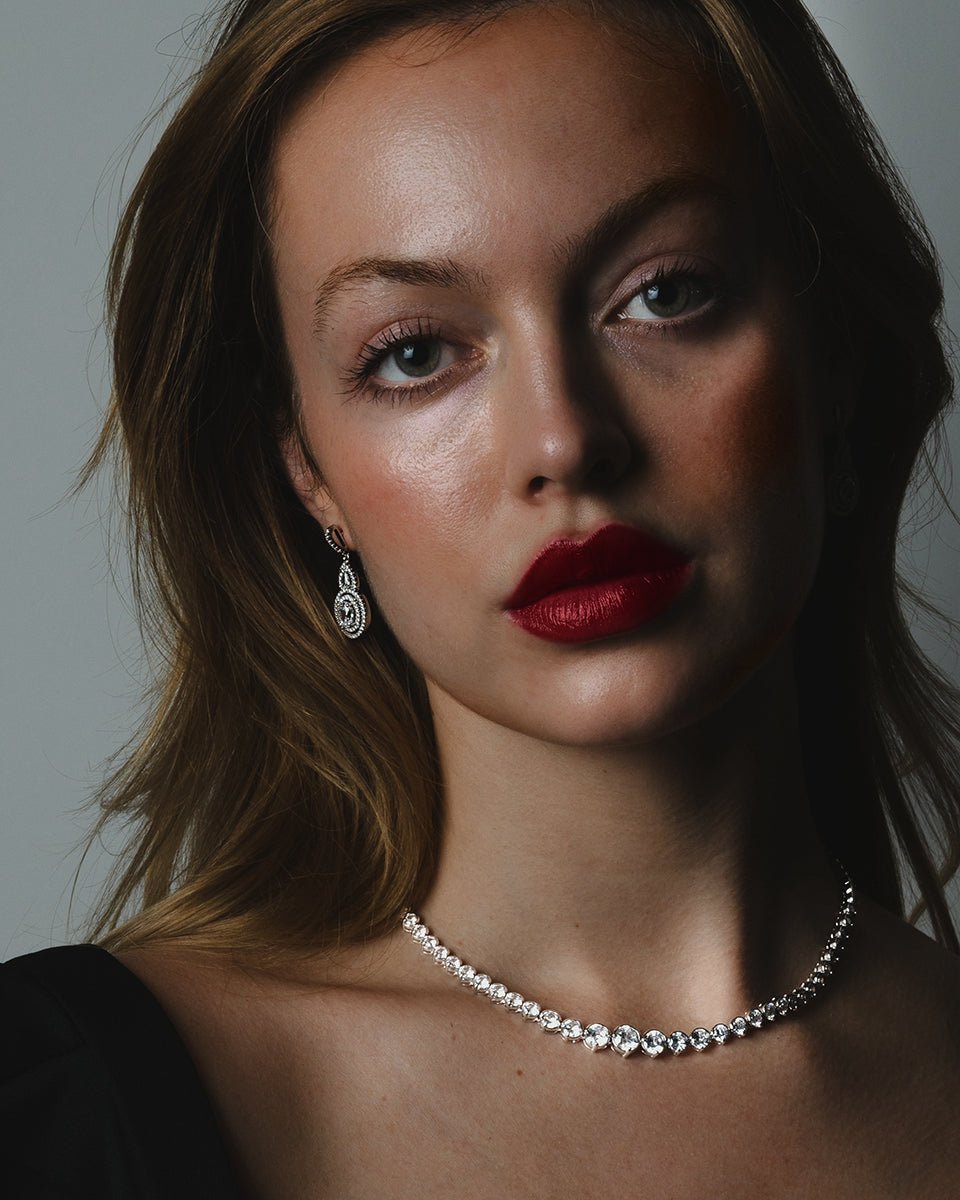
At Godfrey Allure, we have made a deliberate choice. We are not in the diamond business. We are not pretending to be. Our pieces are crafted in solid 925 sterling silver and set with Allyure Stones™ — precision-cut, hand-selected stones that are honest about what they are.
Allyure Stones™ are not diamonds. They are not trying to be. What they are is the most beautiful version of what they actually are — selected for cut quality, set with care, and finished to the standard you'd expect from far more expensive jewelry. They catch real light, in real life, in the kind of slow, deliberate sparkle that defines Old Hollywood glamour.
We chose this approach because we believe the future of fine jewelry belongs to brands that tell the truth about what's in their pieces. No invented scarcity. No inflated mythology. No selling at one price what costs another to make. Just beautiful jewelry, honestly made, priced for the woman who wants to wear it rather than store it.
The Awakening of the Modern Woman
This isn't anti-luxury. It's pro-truth.
It's about elegance without ego. Beauty without burden. Ownership without obligation.
The modern woman doesn't need a diamond cartel to define her worth. She defines it herself — through style, through choice, through awareness of where her money is going and what it is buying. She has stopped asking permission to value the things she actually values.
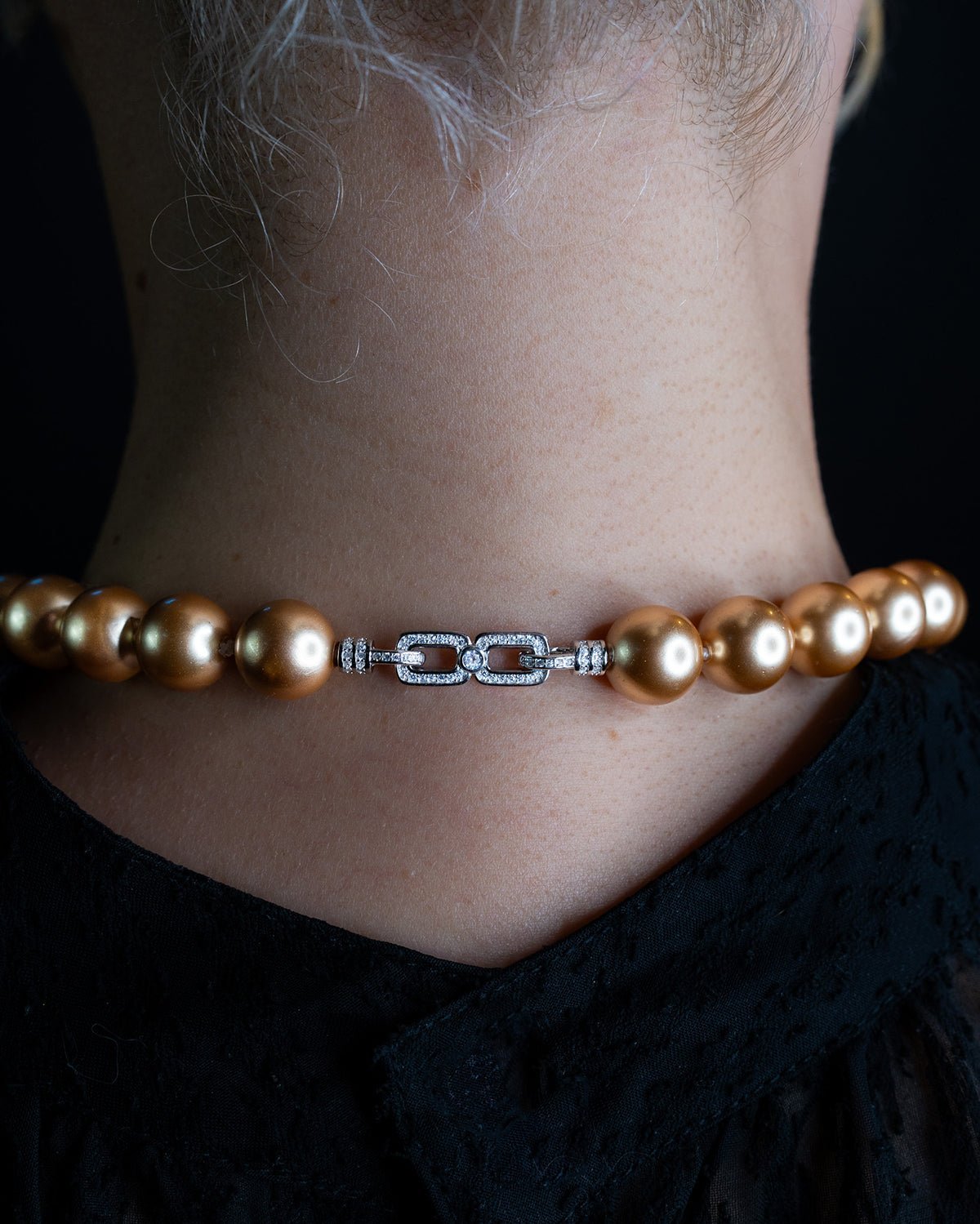
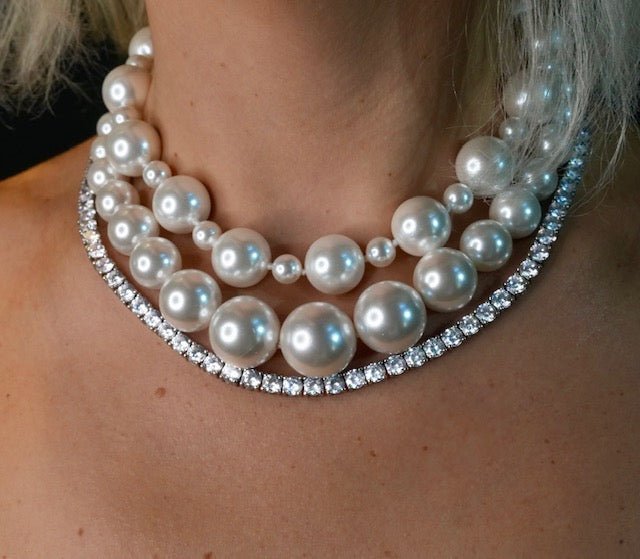
She wears jewelry because she loves it, not because she was told to. She buys what she likes, not what she's been advertised at. And when she puts on her Godfrey Allure pieces in the morning — a sterling silver rivière at the throat, a pair of pearl drops at the ear, a substantial ring on a confident hand — she does so knowing exactly what they are, exactly where they came from, and exactly why they belong to her.
That, more than any cartel-controlled stone, is what real luxury looks like in the 21st century.
Because true allure — true Allyure — isn't rare.
It's real.
— Minka & Omri

Leave a comment
This site is protected by hCaptcha and the hCaptcha Privacy Policy and Terms of Service apply.