
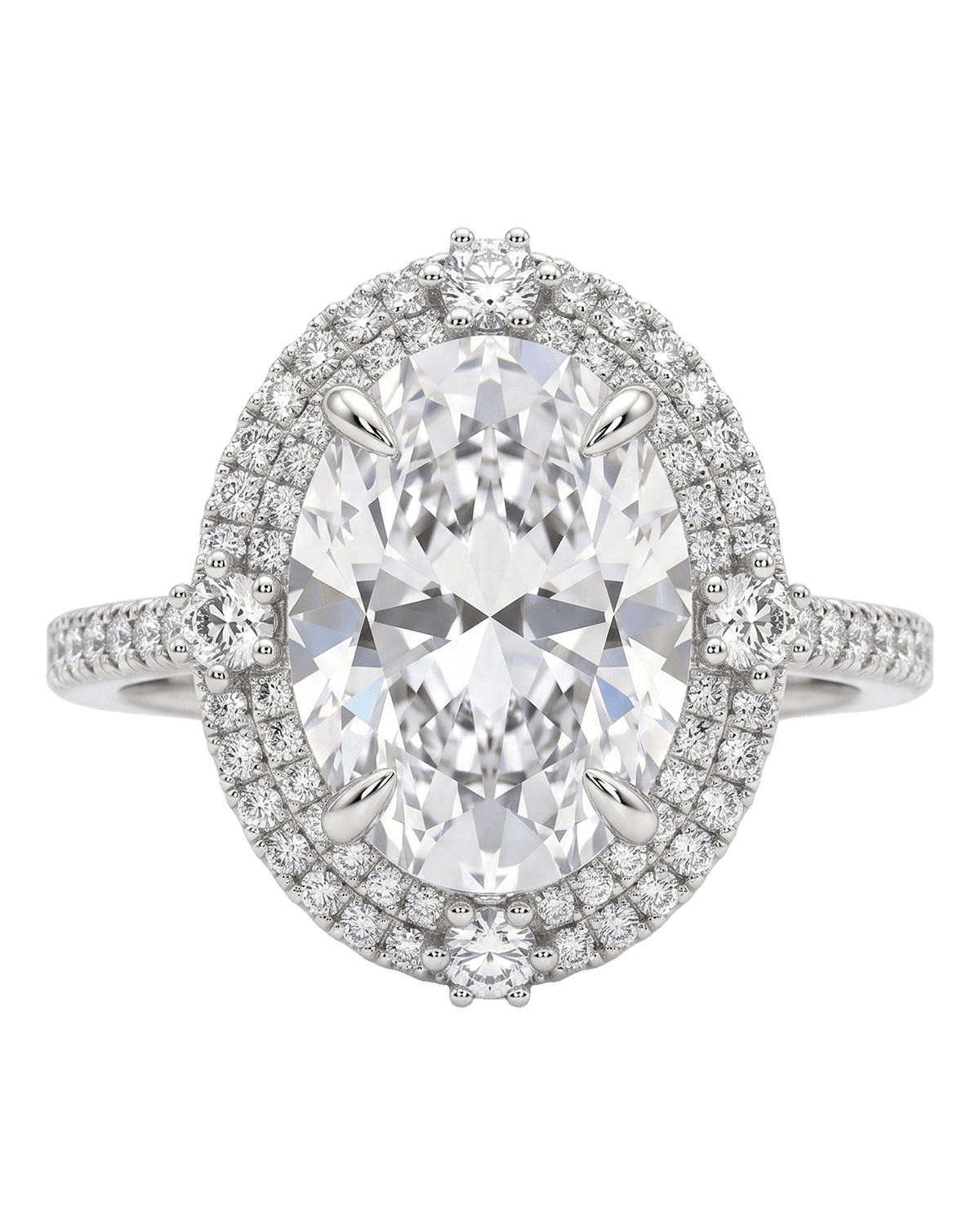
Are Mined Diamonds Really Rare? The Case For Lab-Grown Diamonds and Allyure Stones
The word "rare" has done more work for the diamond industry than the stone itself ever needed to.
Here's the part that rarely makes it into an engagement ring ad: mined diamonds are not geologically rare. They're pulled from the ground by tens of millions of carats every single year, across Russia, Botswana, Canada, Australia and beyond. Most of what keeps prices high was never really about how much is in the earth, it was about how much was allowed to reach the market.
How the 'rare" story got written
For most of the 20th century, a single company controlled the overwhelming majority of the world's rough diamond supply. That company didn't just mine and sell diamonds, it managed the story around them. Stones were stockpiled and released slowly, in careful volumes, to keep demand outpacing supply. A now famous ad campaign, launched in the late 1940's, took that manufactured scarcity and gave it a permanent, emotional home: the idea that a diamond wasn't just valuable, it was forever, and therefore worth whatever it cost.
That monopoly has loosened considerably since. New mines opened, new suppliers entered the market, and the diamond industry today is far more competitive than it was a generation ago. But the story stuck. Rarity, as a marketing device, outlived the scarcity it was built on.
What that means for lab-grown
Lab-grown diamonds are chemically, physically, and optically identical to mined ones. Same hardness, same fire same brilliance under light. The only meaningful difference is where they are formed. And because they can be produced reliably rather than extracted and rationed, they were never able to inherit the pricing model that scarcity built. That's not a lesser stone. It's a stone without a century of manufactured mythology sitting on top of it.
Where Allyure Stones™ fit
At Godfrey Allure, we didn't want to sell a story about rarity. We want to sell craftsmanship. That's why Allyure Stones are defined by precision cut, not material. A stone that earns the name by earning by our cut standard, whether it's lab-grown diamond or other precision-cut gemstones. The value isn't in convincing you something is scarce. It's in the work that goes into how it's set, how it's finished, and how it holds up on your hand for years.
What we found shopping everywhere else
Before Godfrey Allure existed, I went looking elsewhere, shopping popular brands, the ones a lot of influencers recommend. What I found out was disappointing more often than not. Some pieces made my skin itch within minutes of wear. Some looked fine in a product photo and cheap the second they were in my hand. Some just didn't last, or the whole thing stopped looking like what I paid for.
None of that had anything to do with whether the diamond was mined or lab-grown. It had to do with corners being cut somewhere else, in the metal, in the setting,, in the finishing while the "diamond" name did the heavy lifting on price. That's the gap Godfrey Allure was built to close.
So, are they rare?
Not really. They never were. What was rare was a company's ability to convince the world otherwise, for the better part of a century. The stone itself was always this beautiful. It just didn't need to be a myth to prove it.


Leave a comment
This site is protected by hCaptcha and the hCaptcha Privacy Policy and Terms of Service apply.